
Kalyani Strategic Systems' subsidiary, Agneyastra Energetics Ltd, has commenced construction of a Rs 1,500-crore defence manufacturing facility in Andhra Pradesh, aiming to enhance India's indigenous defence capabilities and generate employment.

India and Russia have agreed to encourage joint manufacturing of military hardware and spare parts in India, aiming to improve maintenance of Russian-origin defence equipment and boost overall bilateral defence cooperation.

India's annual defence production has reached an all-time high of Rs 1.78 lakh crore in FY 2025-26, marking a significant 15.6 per cent growth over the previous fiscal year. This achievement reflects a 110 per cent increase since 2020-21 and highlights the country's expanding defence industrial base, driven by policy support and increased private sector participation.

'The share of the private sector is at its all-time high of around Rs 42,000 crore in FY26, reflecting its expanding role in the defence ecosystem.'
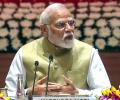
Prime Minister Narendra Modi, in his 'Mann Ki Baat' broadcast, highlighted India's recent achievements in self-reliance, including the maiden flight of the made-in-India C-295 aircraft and the induction of indigenous naval ships. He also lauded the global participation in International Yoga Day and India's success at the World Yoga Asana Championship, alongside Nalanda University's revival of the 'Shastrarth' tradition.

Madhya Pradesh Chief Minister Mohan Yadav and Union minister Jyotiraditya Scindia on Sunday laid the foundation stone for a defence manufacturing plant in Shivpuri district. The unit, comprising a missile complex, a composite propellant complex and a TNT complex, is being set up by Adani Defence and Aerospace, a subsidiary of the Adani Group, at a cost of about Rs 2,500 crore, said officials.

Defence Minister Rajnath Singh has emphasised the need for India to develop a robust drone manufacturing ecosystem to enhance its defence capabilities, drawing lessons from recent global conflicts.
Defence Minister Rajnath Singh has emphasised the need for India to develop a robust drone manufacturing ecosystem, drawing lessons from recent global conflicts and highlighting the importance of self-reliance in drone technology.

Army, Navy and Air Force commanders received enhanced powers to address urgent operational requirements quickly.

Dreamfly Innovations is setting up a 40,000-sq ft aviation battery manufacturing facility in North Bengaluru with an investment of Rs 40 crore. This plant will produce advanced batteries for various drone applications, supporting India's growing drone economy and domestic drone makers.

A tech firm has delivered to the Army 106 turbojet-powered kamikaze drones designed to engage high-value targets deep inside enemy territory and operate in contested electromagnetic environments, according to a statement.

With over 75 per cent indigenous content, the frigate is among the most self-reliant frontline warships built in India.

Defence Minister Rajnath Singh has expressed serious concern over ongoing student protests in Delhi, accusing the opposition of using them as a 'political tool' to further their interests. He urged opposition parties to raise issues in Parliament rather than on the streets, amidst demonstrations against the NEET paper leak.
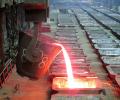
Hyderabad-based Nexon Geochem has partnered with Russia's Giredmet to establish integrated rare-earth processing and downstream facilities in India. This collaboration aims to bridge critical gaps in India's rare earth value chain, focusing on producing NdFeB permanent magnets essential for electric vehicles, wind turbines, and defence systems, reducing reliance on imports.

Precision engineering components maker Indo MIM Ltd is optimistic about the growth of the domestic aerospace industry, particularly focusing on engine applications. The company notes a significant acceleration in foreign OEM interest in India for engineering talent and manufacturing. Indo MIM recently announced its Rs 3,812 crore IPO, opening on July 23, to fund borrowings and general corporate purposes.
Precision engineering components maker Indo MIM Ltd is optimistic about the growth of the domestic aerospace industry, particularly focusing on engine applications. The company notes a significant acceleration in foreign OEM interest in India for engineering talent and manufacturing. Indo MIM recently announced its Rs 3,812 crore IPO, opening on July 23, to fund borrowings and general corporate purposes.
Hindustan Aeronautics Limited (HAL) and Safran Aircraft Engines have signed a long-term agreement for the production and supply of turbine ring forgings for the CFM LEAP engine programme. This multi-year contract, signed at the Farnborough International Airshow, will see HAL manufacture critical superalloy components at its Bengaluru facility, enhancing India's capabilities in advanced aerospace manufacturing and expanding its presence in the international civil aerospace market.

Shares of engineered fabric manufacturer Kusumgar Ltd listed with a significant 37 per cent premium against its issue price of Rs 419, opening at Rs 574 on the BSE and Rs 569 on the NSE.

Hyderabad-based Midwest Ltd has become the first Indian private company to secure overseas critical mineral mines, sealing a deal with Indonesia's state-run PT Perusahaan Mineral Nasional (PERMINAS) to ensure a long-term supply of rare earths.
The initial public offering (IPO) of engineered fabric manufacturer Kusumgar Ltd was subscribed 13.13 times on the second day of bidding, driven by strong interest from non-institutional and retail investors.

The initial public offering (IPO) of engineered fabric manufacturer Kusumgar Ltd was subscribed an impressive 128.85 times on its final day of bidding, largely driven by robust demand from Qualified Institutional Buyers (QIBs).

'ISRO is planning to build a Bharatiya Antariksh Station by 2030. So, our goal is to create a vehicle that can supply modules to the Bharatiya Antariksh Station and bring the products back.'

The visit was expected to project Assam as the gateway to Southeast Asia and reinforce the state's emergence as a preferred investment destination.

The Indian government is actively promoting manufacturing in the rapidly expanding aerospace sector, with collaborations between Indian and foreign companies leading to the establishment of new facilities.

Prime Minister Narendra Modi and Indonesian President Prabowo Subianto have significantly advanced the India-Indonesia Comprehensive Strategic Partnership, securing crucial agreements on defence, critical minerals, and maritime security, including BrahMos missile supply and Sabang port development.

Notwithstanding the economic complementarities and the host of agreements for deepening economic relation on a host of areas, both sides share common viewpoints on the foreign policy domain and seek common grounds to serve as a counterweight to China, notes Dr Rajaram Panda.
Brazilian aerospace company Embraer has secured type certification from India's aviation regulator, DGCA, for three of its commercial jets (E195-E2, E190, and E195). This approval, alongside an existing certification for its E175 jet, paves the way for Embraer to expand its presence in India's regional aviation market, supported by a strategic MoU with Adani Defence & Aerospace for a Final Assembly Line in Dholera, Gujarat.
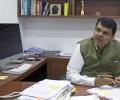
Maharashtra Chief Minister Devendra Fadnavis announced the state's ambition to become India's leader in quantum technology. The state plans to build a robust ecosystem, align with the National Quantum Mission, and train over 5,000 professionals, recognising AI, semiconductors, and quantum tech as key pillars for future growth and global competitiveness.
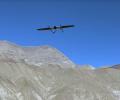
The 515 Army Base Workshop in Bengaluru has signed multiple strategic MoUs to bolster indigenous drone manufacturing and ecosystem resilience, marking a significant step towards modernisation and self-reliance in unmanned systems.

The remarkable rise of smallcaps reflects the emergence of a broad set of specialised businesses operating in industries where the sectoral tailwinds remain considerably stronger than macroeconomic headwinds, points out Debashis Basu.

Andhra Pradesh has launched India's first quantum reference facility, aiming to build a sovereign hardware ecosystem and boost indigenous manufacturing of advanced computing systems.

Paras Defence and Space Technologies partners with Northstar Aviation to provide air-to-air refuelling technologies and support services to the Indian armed forces, enhancing mission endurance and operational flexibility.

In the race for 87 Medium-Altitude Long-Range, Endurance unmanned aerial vehicles deal, around 10 bids have been received from Indian private and public sector firms.
The 515 Army Base Workshop (ABW) in Bengaluru has signed multiple MoUs to strengthen indigenous drone manufacturing and ecosystem resilience, marking a significant step towards modernisation and self-reliance in unmanned systems.

Indian startup funding plummeted by 43 per cent year-on-year to $7.81 billion between March 1 and June 15, 2026, largely due to the West Asia conflict, which has amplified global risk perceptions, tightened liquidity, and led to rupee depreciation, making global investors cautious.

For the foreseeable future, the most likely outcome remains continuation of the status quo. Taiwan will remain self-governing without formally declaring independence, while China continues to apply sustained pressure short of war, predict Krishnan Srinivasan and Manoj Mohanka.

Prime Minister Narendra Modi has urged states to balance the opportunities presented by artificial intelligence with the need to safeguard against social challenges like cyber fraud and drug abuse. He also warned of the risks posed by El Nino conditions, calling for stronger water conservation measures and emphasising the collective resolve towards a 'Viksit Bharat'.

A lesson for India is to clearly define objectives beforehand, so that the adversary or other parties do not attempt to mitigate them midway.

History may remember Takaichi Sanae not as the leader who simply accelerated Japanese rearmament, but as one who governed during Japan's transition from an industrial-age security model to a post-industrial strategic member of the global order, points out Varun Arya.

Assam emerged as the fastest-growing large state with a remarkable 17.3 per cent nominal GDP CAGR over five years.
